

If you’ve ever bought a cordless drill from one brand and a saw from another, you know the problem: the batteries don’t fit. Each brand uses its own battery shape, connectors and electronics, so you end up with several chargers and a drawer full of packs.
Power tool battery standardization is the push to fix that. There’s no single universal battery yet, but there are now real cross-brand systems, plus new regulation in Europe. Here’s what’s actually happening and how it affects your next purchase.
Why are power tool batteries not standard?
Most cordless tools today use 18V (or “20V max”, which is the same nominal voltage measured differently) lithium-ion batteries. So why don’t they fit each other?
- Different shapes and connectors. Each brand designs its own slide-on pack.
- Electronics and communication. Modern batteries talk to the tool and charger to manage power, heat and safety. These systems are proprietary.
- Business reasons. A battery platform keeps customers buying the same brand, which is often called “ecosystem lock-in”.
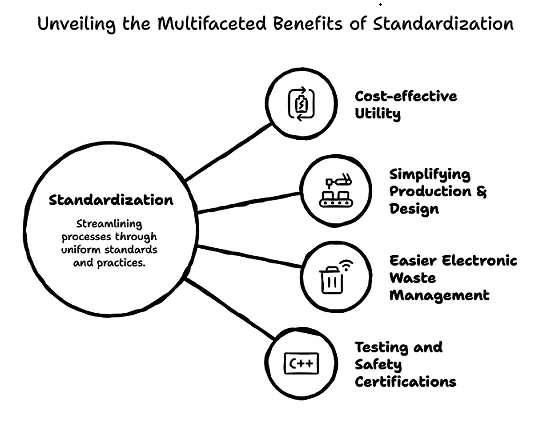
The cross-brand battery systems that exist today
Instead of one universal standard, manufacturers have formed alliances: groups of brands that share one battery platform.
| System | Led by | Launched | Voltage | Scale |
|---|---|---|---|---|
| CAS (Cordless Alliance System) | Metabo | 2018 | 18V | Rothenberger reports over 30 manufacturers and 300+ tools (some pages say 40 brands) |
| AMPShare | Bosch, with Fein and Rothenberger as founding partners | 2022 | 18V | About 10 brands and 200+ tools at launch, with plans for 25+ brands |
So if you buy into CAS, for example, one battery can run tools from Metabo and other member brands. Big brands such as DeWalt, Makita and Milwaukee still run their own separate platforms.
What about adapters?
Third-party adapters let you use one brand’s battery in another brand’s tool. They can work, but be careful:
- They usually bypass the communication between battery and tool, which can remove overheating and over-discharge protection.
- They can void your warranty.
- Quality varies a lot.
My advice: if you use adapters, choose well-reviewed ones, don’t use them on high-draw tools, and never leave charging batteries unattended.
What EU rules change
The EU’s Batteries Regulation (EU) 2023/1542 doesn’t force one universal power tool battery, but it does push the industry towards more repairable, recyclable batteries:
- From 18 August 2024: CE marking on batteries
- From 2026: clearer labels with capacity, chemistry and disposal information
- From 18 February 2027: portable batteries in products must be removable and replaceable by end users, and QR codes linking to battery information start to apply
- Collection targets for portable batteries: 63% by the end of 2027 and 73% by the end of 2030
These rules make it easier to replace and recycle batteries, which reduces e-waste. If you care about that side, see my guide to buying recycled electronic devices.
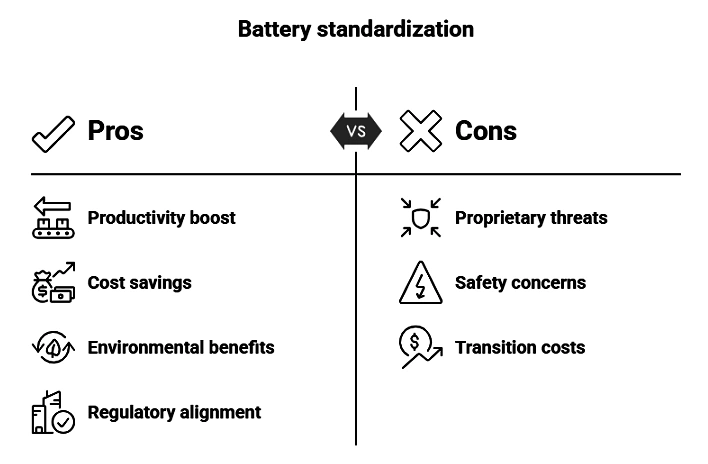
Pros and cons of standardized batteries
For users
- ✅ Fewer batteries and chargers to buy
- ✅ More tool choice across brands
- ✅ Less e-waste
- ❌ Alliances still don’t include every major brand
- ❌ Choosing a platform is a long-term commitment
For manufacturers
- ✅ Smaller brands can offer cordless tools without building their own battery system
- ❌ Less lock-in for the big brands, so less incentive to join
How to choose a battery platform
- List the tools you’ll need over the next few years, not just today.
- Check which platform covers them. If you need specialist tools from several smaller brands, CAS or AMPShare may suit you.
- Compare battery prices. Batteries are often the most expensive part.
- Check the warranty on batteries and chargers.
- Recycle old batteries properly. Never put lithium-ion batteries in household waste.
For more on smart tools around the house, see my guide to smart home technology and automation ideas.
Frequently asked questions
Is there a universal power tool battery? No. The closest options are cross-brand alliances such as CAS and AMPShare.
Are 18V and 20V max batteries the same? They’re the same nominal voltage. “20V max” refers to the peak voltage of a fully charged pack.
Is it safe to use a battery adapter? It can be risky, because adapters often bypass safety communication. Use them with caution.
Will EU rules make all batteries compatible? Not directly. They focus on labelling, replaceability, safety and recycling, not a single battery shape.
Related guides on WebTechHelp
- Buying recycled electronic devices for a better future
- How smart home technology is changing your life
- How to reduce food waste with technology
Sources
- Rothenberger: Cordless Alliance System (CAS)
- Bosch: Bosch, Fein and Rothenberger launch battery alliance AMPShare (September 2022)
- Flash Battery: Guide to the EU Battery Regulation 2023/1542