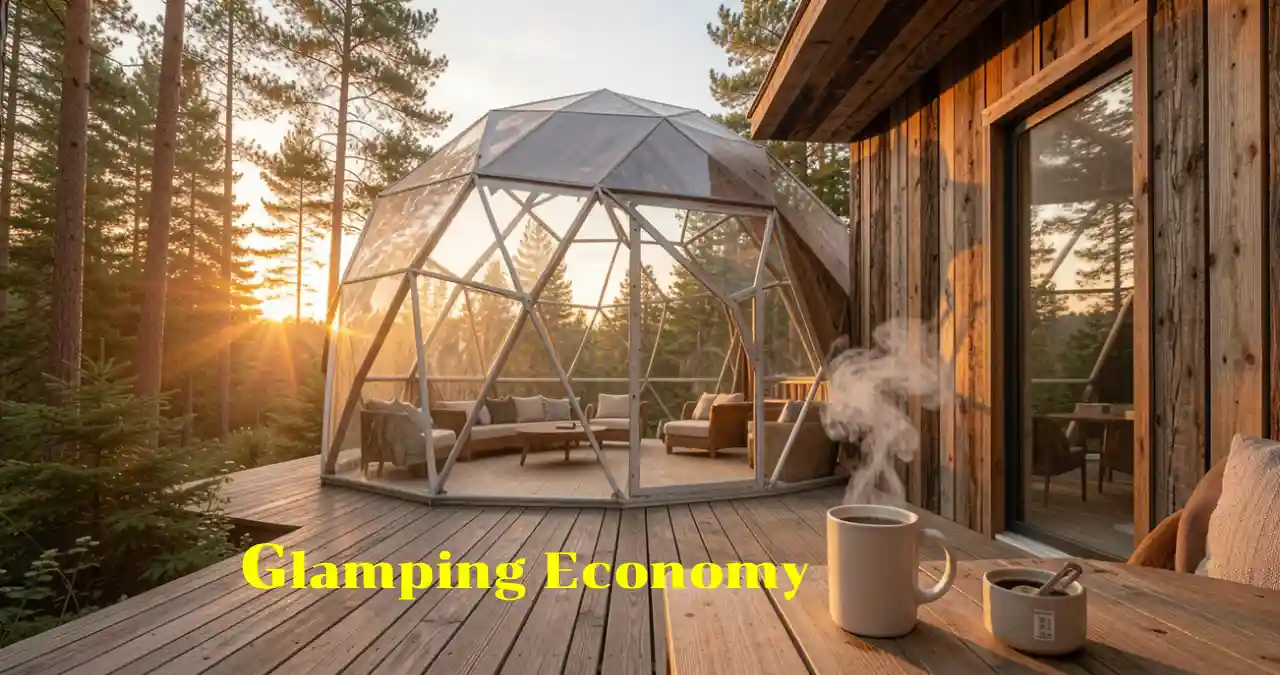
There is no doubt left about the skyrocketing surge of the glamping economy. Everyone in contemporary times prefers to witness a luxurious outdoor experience full of amenities with no sacrifice of comfort.
It is becoming a fundamental demand for Gen Z and millennials who are consistently searching for a means to set them free from the unbearable stress they are juggling daily with their hectic daily life. Understanding the demographic insights of the target group helps business professionals succeed with the glamping business. To know more about why the economy witnessed a rapid rise, read from scratch.
What is Glamping Economy- an overview
The root of the term glamping originates from combining two words, namely glamour and camping. It denotes an accommodation facility that gives users a thriving experience to enjoy sleeping and enjoying in the lap of nature, filled with amenities and comforts as a hotel would provide. There has been a rapid upsurge in the glamping economy that converts luxurious camping into a tourism model, confirming higher growth, profitability, and revenue.
Knowing Consumer Insight & B2B Strategy for Consolidation
Glamping offers a perfect escapism from drudgery for millions of people to keep themselves free from the hectic schedules of work and the unbearable stress they are juggling daily. Unlike traditional camping, demanding to prepare oneself and equip with outdoor skills, glamping builds a subtle connection with nature without compromising comfort.
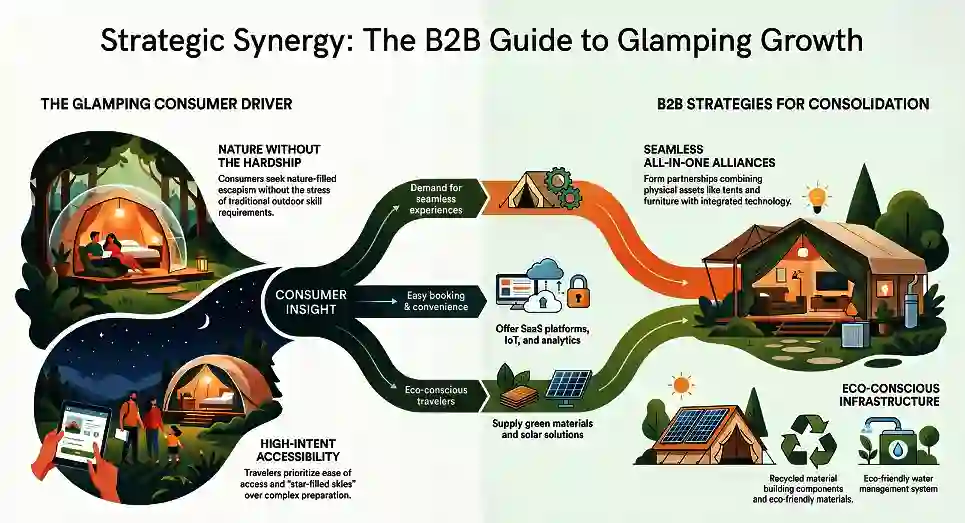
Nothing can beat the beauty led by glamping for its easier accessibility. Understanding customers’ intent is invaluable for B2B businesses (suppliers, service providers and partners) to upscale their glamping operation. Keeping a close eye on customers’ profiles is important. Suppose an Austin resident has decided to drive for three hours to reach the Texas Hill Country to enjoy rolling oak-covered hills and star-filled skies.
Having a clear idea of customers assists B2B glamping businesses in expediting targeted marketing and helps them to assist customers with direct bookings to earn more revenue. Lets have a look at how consumer Insight is a key lesson for B2B to further consolidation.
| Key Lesson | Consumer Insight | B2B Strategy for Consolidation |
| Partnerships | Demand for seamless, all-in-one experiences | Form alliances (tents + furniture + tech + experiences) |
| Product Diversification | Variety in accommodations & year-round stays | Modular & adaptable units & ancillary revenue tools |
| Data-Driven Expansion | Rise in domestic nature escapes | Provide market research and feasibility tools |
| Technology Integration | Easy booking & convenience | SaaS platformschannel managersIoTanalytics |
| Sustainability Focus | Eco-conscious travellers | Supply green materialssolar solutions, and certifications |
Statistics and trends
Having a keen understanding of statistics and trends helps glamping business owners to stay aware of the competitiveness of the glamping economy, that would projected to reach a value of USD 7.87 billion by the end of 2033. Go through some details of key statistical information.
| Metric | Fact Details | Key Highlights |
| Global Market Size | USD 3.79 billion (2025) → USD 7.87 billion (2033) | CAGR 9.5% (2026-2033) |
| Year-over-Year Growth | ~9.5% CAGR globally | North America: 11.7–12.9% CAGR |
| Average Nightly Rate | $150 – $250+ | Higher in the US or premium sites in Europe |
| Occupancy Rate Benchmark | Target 50%+Breakeven 25–40% | Industry feasibility standard |
| Top Markets | 1. Europe 2. North America 3. Asia Pacific | Europe: France, UK, Germany, Italy Asia: India, Thailand, Australia |
| Demographics | –32 yrs (Millennials + Gen Z): ~ Highest 43.9% 33–50 yrs: Significant & fast-growing Older (65+): Smaller share | Younger group dominates; 33–50 growing rapidly |
According to the data from Global View Research, the global market size for glamping was USD 3.79 billion as of 2025, and is projected to reach a value of USD 7.87 billion by the end of 2033.
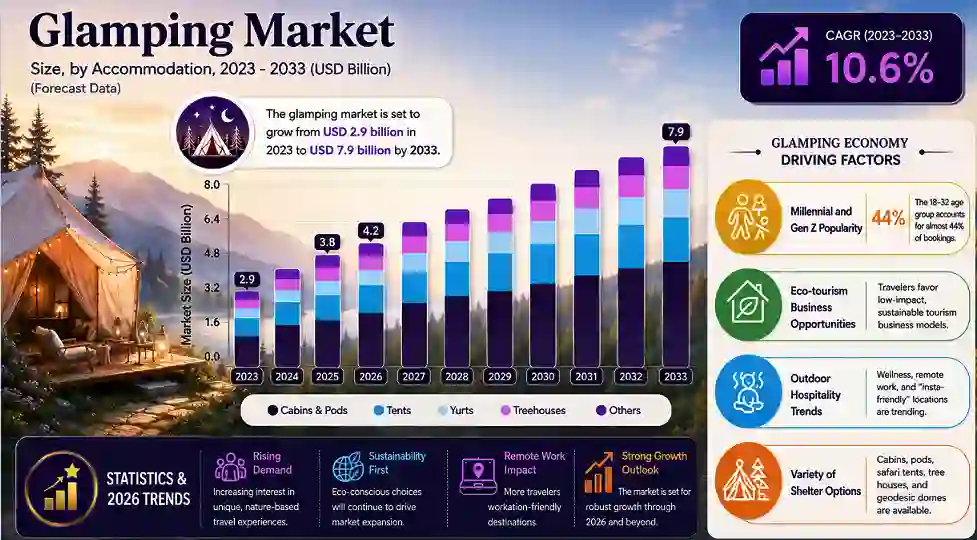
There are some driving factors behind the steady thriving of the glamping economy. Gen Z popularity, an overwhelming business opportunity in eco-tourism and outdoor hospitality, and, last but not least, a myriad of shelter options at glamping sites are the reasons behind it.
Glamping Economy: How do businesses collect money
Glamping economy drives significant return on investment (ROI) for businesses. There are two distinct types of revenue streams for the glamping economy: primary and secondary. Room rates, duration of stay and the holiday rates, regular value define the primary source of revenue for it.
Room rates depend upon seasonal factors, the target destination and also on the level of luxury & amenities you are experiencing. Secondary revenue sources include wellness packages like spa treatments and yoga, add-on adventure packages, and event hosting.
How to kick-start a glamping business
Starting a glamping business involves finding an accessible location and securing land-use permits to give visitors a unique experience and earn a profit.
| Parameters worth considering | Key Actions | Rationale behind considering |
| 1. Concept | Offer a canvas tent in nature. | Low cost, high comfort, easy setup. |
| 2. Location | Choose scenic land near parks, beaches, or farms. | Checking zoning & permits is important to avoid any issues later on. |
| 3. Marketing | List on Airbnb, Glamping Hub, Hipcamp. | Use beautiful photos & social media posts to attract visitors |
| 4. Tips | Start small (1-2 tents), focus on sustainability & guest comfort. | Follow local regulations. |
| 5. Setup | Use quality canvas tents with real beds, lighting & seating. | Offer comfort, durability and a better experience to visitors. |
| 6. Experience | Provide comfort + activities like campfire, stargazing, or guided tours. | Attract visitors |
| 7. Pricing | Use dynamic pricing higher on weekends & peak season. Tents can recover costs in ~14 days. | Helps to tackle price fluctuation between peak and off-season. |
The three core Pillars of Sustainable Glamping
For anyone who has made up their mind to start a business with glamping, never ignore the three core pillars to reframe a sustainable glamping where there is a coexistence of harmony between luxury and environmental stewardship.
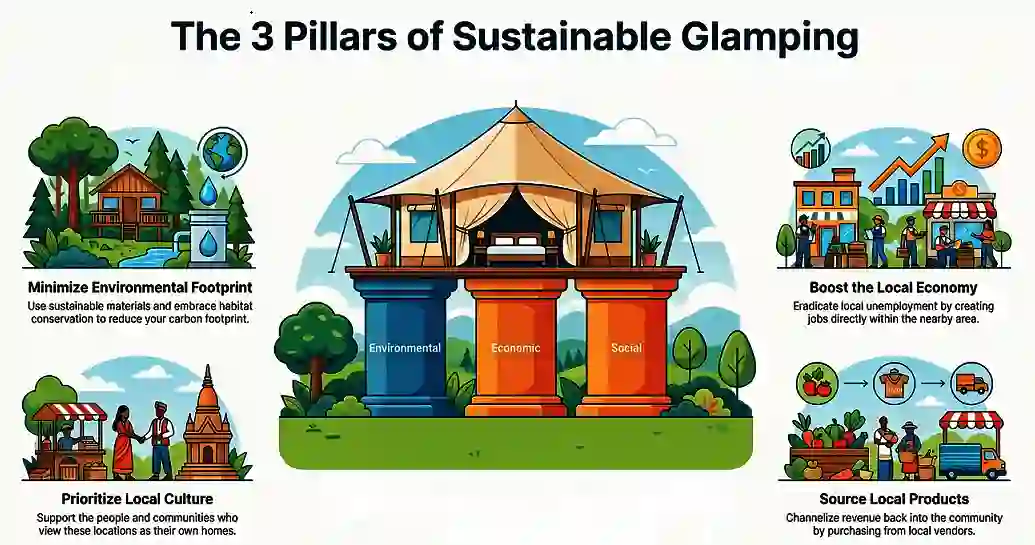
Environmental sustainability sheds light on minimising the carbon footprint by embracing environmental stewardship, using sustainable materials, and aiming to translate natural habitat conservation into reality.
Economic sustainability is an invaluable pillar where glamping sites boost the local economy by creating jobs in the local area, eradicating unemployment and channelising the economic revenue by sourcing local products. Social sustainability priorities supporting local cultures and communities, reaffirming that tourism is interwoven with the people who think this residence nothing less than beautiful home-destinations of their own.
Risks & mitigation tactics for Glamping
Although there is a fast-growing potential for the glamping economy, the highly profitable sector may still face some risks that demand attention for consideration. Total initial investment sometimes exceeds the estimates. To resolve the risk, a budget buffer and a contingency plan for cost overrun are needed.
Adverse weather affects guest experience and increases cancellation rates. To rule out the risks, cancellation policy reviews are crucial and should never be ignored. Seasonal fluctuation of occupancy rate leads to lower revenue in off periods. Diversifying the target guests helps to meet the fluctuating seasonal demand. Zoning, clearances, and other approvals can render delays that cause the need to hire a legal consultant and permit pre-check.
Maintaining the checklist as risks rise helps mitigate the underlying impact of strain on the glamping economy.
What’s fueling the glamping economy
Myriad factors act as a catalyst to boost the glamping economy. Let’s have a look at each factor and how they work.
| Factors that fuel glamping | How it works |
| Experience-driven Travel | Glamping offers an immersive experience and local cultural interactions, leading to repeat visits. |
| Wellness and Nature Connection | Rising demand for removing fatigue from burnout pushes people toward nature escapes. |
| Social Media-driven Visual Appeal | Eye-catching spots and professional photos drive organic discovery and speed up overall booking. |
The future of glamping
There will be a promising future waiting to be thrived in future for glamping. Thanks to smarter technology. The glamping site is more appealing for Gen Z, millennials and later generations. Understanding the demographic insight would help business professionals to kick-start their hospitality business with better profitability in a scalable manner.
Understanding the intention of people who want to wipe away the urban stress they are juggling in their daily routine creates the backdrop for investors to start the glamping business. Embracing sustainable practices by businesses like wastewater management and harvesting rainwater is a way to attract eco-conscious consumers.
Conclusion
When a struggling period knocks, creating intermittent trouble for the traditional hospitality glamping economy experiencing a skyrocketing forward leap. It is not just a trend. Rather, it is projected to become a USD 7.87 billion market value entity by the end of 2033.
The profitability and potential for growth in the glamping business sector bring an indicative measure that simply points to better consolidation and growth for the aligned economy.
Frequently asked questions (FAQs)
There is a big size for the glamping industry, which was USD 3.79 billion as of 2025, and is projected to reach a value of USD 7.87 billion by the end of 2033.
Yes, definitely it is. Unlike traditional hospitality, glamping is a profitable business offering a higher return on investment (ROI).
The United States is listed at the top with the largest share of the glamping market.
Zoning & land-use approval is a prerequisite before starting a glamping business.