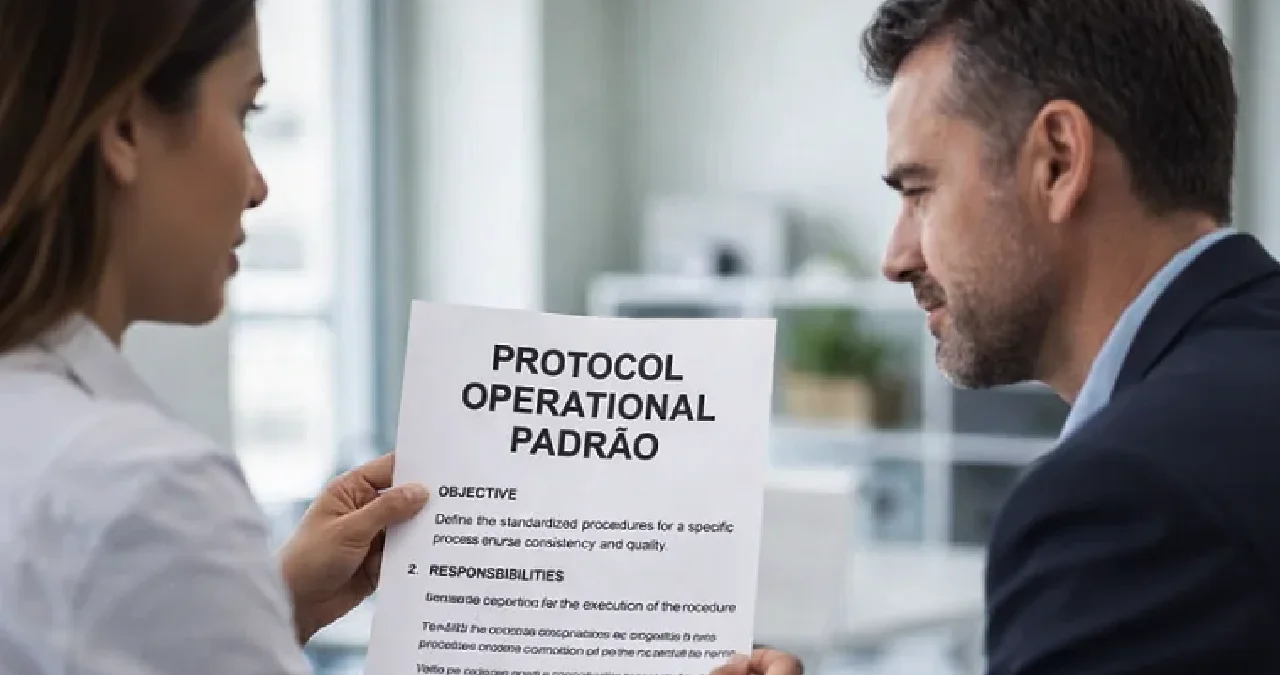
Managing everyday tasks in every organization may seem intimidating, regardless of the sector or size, right? Now the question is how to carry out everyday operations consistently that can sweep away miscommunication, errors, and inconsistency. Here’s how protocolo operacional padrao is growing as a fundamental necessity that can handle any task with ease.
Now I think you are definitely stuck with the terminology Protocolo Operacional Padrão, right? It is a Portuguese term that refers to a structured written document assisting a specific task to be performed. In English, it is synonymous with Standard Operating Procedure (SOP). Here in the Webtechhelp blog, I will discuss a complete breakdown of what it actually stands for and why it is important. I also discuss common applications, challenges of implementation, and much more. Let’s roll to discover it from scratch.
What Is a Protocolo Operacional Padrao?
A protocolo operacional padrão (POPs) refers to a well-crafted written document showing the actual way a particular task is presented. The main purpose is to maintain consistency and efficiency in managing tasks, regardless of who actually performs. It is not just a written document that showcases a set of instructions.
Above all, it is a guideline that specifies the task that needs to be performed. It also deploys responsible personnel to outline the steps for execution. In the Standard Operating Procedure, there is no concocted guesswork with daily activity management for workflow handling.
| Origin: PortugueseIn English: Standard Operating Procedure (SOP)Purpose: Dealing with miscommunication, errors, and inconsistency in workflow management for the firm, regardless of size and sector. |
Why Organizations Use Protocolo Operacional Padrao?
Organizations embrace Protocolo Operacional Padrao for myriad reasons, especially for an accountable and safer way of workflow management. Go through the reasons mentioned below with justification.
☑️ Managing tasks consistently: It is often seen that involving multiple people on the same task may cause variable results, as they lack fixed guidelines for handling the workflow. Here’s why organizations embrace it. Furthermore, it helps them to maintain efficiency in task handling regardless of who actually performs the activity.
☑️ Quality monitoring: Keeping a close eye on quality and service management is invaluable, as they are the cornerstone to guarantee measurable outcomes that subtly align with organizational standards.
☑️ Onboarding and employee training: protocolo operacional padrao are just like a boon for newer employees. During the phase of adaptation with early onboarding, the written procedure, instead of verbal instruction, assists them in reducing mistakes. It also helps their knowledge acquisition faster.
☑️ Compliance with legal obligations: with highly regulated food production, healthcare, and the pharma domain, the use of the Protocolo Operacional Padrao helps them to comply with legal obligations.
☑️ Risk mitigation: Miscommunication, errors, and inconsistency in workflow can elevate the risk, which are minimized with the meticulously designed standard operating procedure.
☑️ Documentation in an accountable manner: Assigning the responsibility to the allocated people, this procedure makes audit tracking & documentation handling accountable.
Common Applications
Nearly every industry at present times depends upon this procedure. Let’s see its applicability across distinct industries in every nook and corner.
👉 Healthcare: POPs seem helpful in a healthcare setup, from admitting patients to assisting them with necessary medication, all under the same roof. This procedure helps to decipher the exact stepwise processes of dealing with intravenous medication for patients. It also assists in knowing the primary reasons behind dosage errors and reducing them.
👉 Pharmaceuticals: Pharma companies depend nowadays upon strict oversight for regulatory guidance to guarantee safety compliance. From compound mixing, product testing, to storing them in the proper place, everything is meticulously maintained. It is in a documentation format to prevent any safety compromise from happening.
👉 Food Industry: Food industries are also increasingly dependent upon POPs for deliberate handling of equipment, cleaning prospect and last but not least, temperature monitoring. Meanwhile, it is helping the food industry to reduce unnecessary food spoilage and increase shelf life. This helps prevent contamination for better public health support.
👉 Manufacturing: In terms of consistent product quality monitoring and quality inspection, POPs are utterly invaluable for the manufacturing industry to regulate equipment usage and upkeep of them to reduce the occurrence of risks.
👉 Public Services sector: Keeping a bird’s-eye view on record keeping and public record management is essential. The standardization seen in POPs helps to efficiently deal with administrative tasks for prolific benefits in government and the public domain.
👉 Education: Educational institutions are leveraging this procedure for handling student admission and cross-examining laboratory safety. This indeed guarantees the system’s fairness and lessens the administrative fault.
Core Elements of POPs
Although there is a sharp distinction in different industries as per their function, there is still a common structure among them all. A well-designed POP includes the following mentions, no matter what the sector or size. Let’s have a look at the core elements mentioned in bold font below
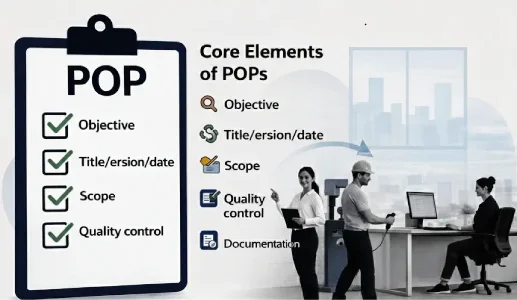
Objective to explain its fundamental purpose
The title that comes up with a specific version, reference number, followed by the date of approval.
Scope defines the actual context
Procedure written in lucid and clear language often contains checklists and flowcharts
Quality control for satisfying the verified details
Documentation is a record act as proof of subtle compliance
Challenges in Implementing POPs
Despite the application of the Standard Operating Procedure in diverse industries, it may come up with some challenges of implementation.
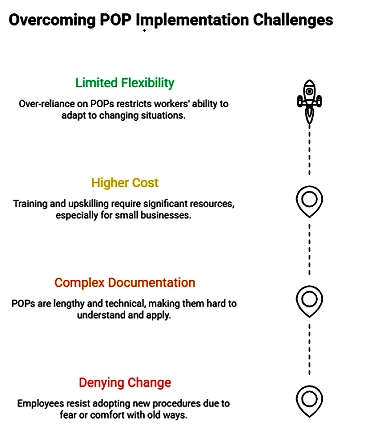
- Denying the necessity to embrace change: Employees sometimes don’t feel it’s justified to embrace the change, as it seems intimidating for them to change the older process.
- Complex Documentation: Some POPs are difficult to translate into practice as they are technically lengthy & by nature, documentation is complex.
- Higher cost of implementation: Employee training and upskilling require plenty of resources and time that is really troublesome for smaller firms.
- Over-reliance limits the flexibility: Over-Reliance on the POPs Procedures may limit the flexibility for workers to find it really tough to acclimatize with.
Wrapping up
Protocolo Operacional Padrão is not just a written instruction, but also serves as a tool that promotes better safety and consistency. It is a solution for workflow management with better efficiency without quality compromise. If you want to sweep away miscommunication glitches and inconsistencies with your task management, you may consider the standard operating procedure for better performance with reliability.