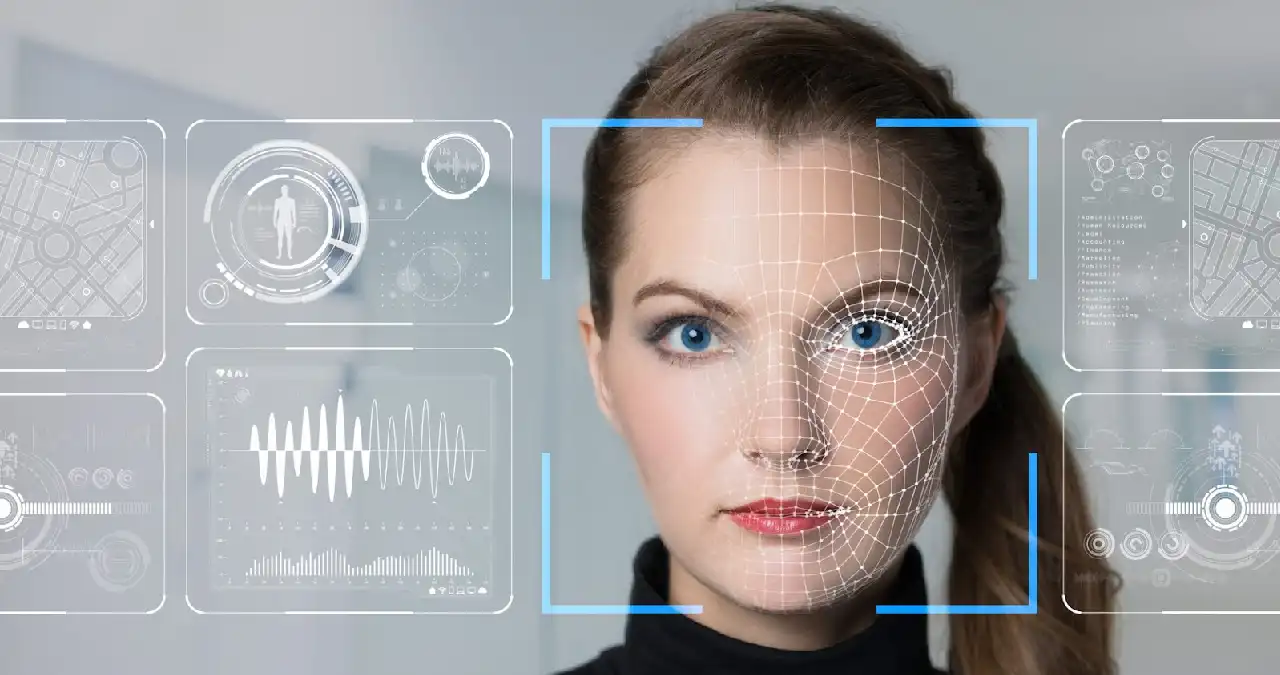
With the world still undergoing digital transformation, the issue of identity verification has emerged to be one of the most critical issues of concern to businesses, governments as well as individuals. Since it is possible to open a bank account online and view healthcare portals or even shop via e-commerce, cheap and safe systems of authentication are paramount. Facial recognition has become one of the most popular biometric solutions due to its convenience and speed, although it is not infallible. Due to the emergence of fake images and spoofing tools, it has become essential to confirm the authenticity of a face shown to a camera to a real and live human being. This is where the technology of liveness detection is very crucial as it makes sure that the authentication systems are not fooled into accepting the fake images, videos, or masks.
Understanding the Limitations of Facial Recognition
The facial recognition systems operate through a process of analyzing the distinct features of the face of an individual and comparing it with a stored information. Although this system is very effective in identity confirmation, there is a big challenge to it, namely, it is subject to deceit by non-living representations. An example of this is that the fake identity can be attained by the use of printed photographs, video replays or even hyper-realistic masks to impersonate an individual. The breakthroughs in the field of artificial intelligence have made it possible to produce deepfake videos, which not only copy the face of a person, but also capture his or her movements and facial expressions.
Facial recognition, in itself, does not have the capability of establishing whether or not the particular face that is identified is a face of a living individual communicating in real time. This has been the reason of increasing fraud, particularly in the banking, e- commerce, and remote employment sectors. In an attempt to overcome this weakness, the liveness detection technology was created that could be used in conjunction with facial recognition to enhance the integrity of identity verification.
What Is Liveness Detection Technology?
Liveness detecting technology is aimed at distinguishing between live and real human beings and its fake counterparts. It does not merely compare the features of the face, but is concerned with the finding of indications of a living body that can hardly be imitated by a scammer. This involves natural movements of the eyes, minor things in the change of skin colour with varying light conditions or the depths or three dimensionality of the face structure.
Through the analysis of these indicators, liveness detection would ensure that the individual under verification is actually present before the camera. Such an ability provides an extra layer of security, and it will be much harder to compromise or defraud the system.
How Liveness Detection Works
The technology is typically classified into two, which include active and passive detection.
Active liveness detection involves the user to take some actions like blinking, head turning or smiling. These waves give us live evidence that the person indeed is alive and communicating with the system. Active methods are rather inconvenient to users, although these methods are very secure.
Passive liveness detection, in its turn, is used in the background and does not presuppose the input of the user. It does an analysis of the video stream to identify natural depth, texture and lighting effects that exist only in live interactions. This will give a smooth user experience and a high level of protection against fraud.
Both strategies are popular and a large number of organizations follow a mixed-form of approach in order to find a compromise between convenience and security.
Applications of Liveness Detection
Liveness detection technology is fast gaining adoption in industries. In financial services, it assists banks and fintech firms to fight identity theft in the process of digital onboarding and transactions. Customers are able to open an account or authorize payment remotely and they are sure that their identity will not be stolen.
Liveness detection is used in e-commerce to ensure that an unauthorized buyer can not make any unauthorized purchase. It ensures that the individual making a payment is the owner of the account. In the medical field, it also makes sure that medical information is not obtained by unauthorized people. Even in education, institutions are adopting the liveness detection in online examination to ensure that it is the registered student doing the exam.
National ID systems, border control and e-voting are other areas where government agencies are adopting this technology and secure authentication is essential. The vast variety of applications shows the importance of the liveness detection in the modern digital world.
Combating Modern Fraud with Liveness Detection
A variety of threats has arisen due to the emergence of deepfakes and synthetic media both to organizations and individuals. Manipulation with digital identities has become frighteningly accurate and endangers the traditional verification systems. Liveness detection is an extremely effective defense mechanism that identifies authentic human interaction that cannot be convincingly emulated by a digital forgery.
Indicatively, the most sophisticated deepfake might easily replicate facial movements, yet it has difficulty with the natural three dimensional depth of a face as it changes with light. On the same note, skin texture and micro-expressions can hardly be faked convincingly. Liveness detection takes advantage of these minute, yet essential cues in order to be a step ahead of the attackers.
Benefits for Businesses and Users
In the context of businesses, liveness detection provides not only ways of protecting against fraudulent activities but also regulatory frameworks including KYC (Know Your Customer) and AML (Anti-Money Laundering). The regulators are becoming more demanding that organizations employ sophisticated procedures that guarantee secure and precise identity checking. Facial recognition and liveness detection can be used together to fulfill these requirements, and the businesses can offer customers a smooth experience in onboarding the business.
To the users, the technology will mean more trust and peace of mind. They are assured that their identities cannot be impersonated because they can freely employ online services. Liveness detection is a win-win scenario to both customers and organizations because of the proportion between the two.
The Future of Digital Identity Verification
Since the digital interactions remain to develop, the level of fraud attempts is going to get more advanced. Hackers will discover additional means of abusing vulnerabilities of identity verification systems. Nevertheless, further developments of the artificial intelligence and machine learning will further enhance the liveness detection and make it more precise, quicker, and less obtrusive.
Liveness detection will probably become a part and parcel of any digital experience in the future, whether unlocking a device, verifying an online purchase or voting in a safe and secure digital election. It will not only be a layer of protection; but a normal attribute of the modern authentication systems.
Conclusion
In a world where online purchases and remote communication are the order of the day it is important to ensure identity validation. Facial recognition has provided a framework to convenient biometric authentication yet it needs to be enhanced in order to be able to counter contemporary threats. The Liveness detection technology offers such reinforcement by making sure that live persons only can pass verification tests.
Using the combination of the two potent technologies, organizations will be in the position to remain ahead of the fraudsters and provide users with a smooth experience. In the increasingly digitalized world, liveness detection will be the core of secure and trustful identity systems that will define a safer and more trustworthy digital future.