Cyber threat is becoming a burgeoning problem that makes your online data safety a concern. Strengthening data privacy to secure information against breaches seems intimidating for many users. It is due to the spreading news of data leakage, which is rampantly outage around the world.IP2 Network is somehow becoming a buzz that has a peer-to-peer structural conformation credible enough to handle any attack or outage on networks. Here in the blog i will discuss a complete walkthrough on how it works, key features of it, how to set up, followed by benefits, applications, and much more.
What is the IP2 Network?
IP2 network is a peer-to-peer (P2P) decentralized model of networking that brings multiple devices to communicate directly with the Internet Protocol. Here, you do not require any third-party-based gatekeepers or any prime centralized server. It frames an anonymous and secure data sharing in contemporary days that is hard to visualize.
How the IP2 network works
Before comprehending the basic functionality of IP2 networks, one indeed requires a key grasp of the structural understanding behind the network. Unlike the conventional system, which entirely relies on data transmission on a central hub, this network is a mesh with interconnectable nodes.
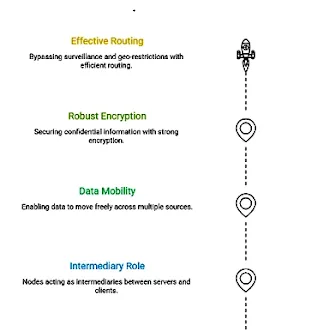
Each node is somehow acting as an intermediary between the server and the clients, which is inextricably associated with the receiving and transmission of data. Here, nodes are a form of architecture that develops by connecting all interlinked devices. This works as a data mobility function across multiple sources to expedite reliability.
During data transmission, the robust encryption within the network helps to keep the confidential information secure and free from any data breach. The IP2 network is capable of making data routing effective, which is credible enough to bypass any surveillance & geo-restriction.
Key Features of IP2 Network
Unlike traditional networks, IP2 Network is well-equipped with some advanced features, making it ideal to gain ground. Let’s have a look at some features seen in this network.
- Performance & speed: The decentralized network ensures faster data connections across this system with minimal latency. The faster data transfer makes communication robust, which contributes to an accelerated, smoother, and sleeker data transmission.
- Enhanced Security: Leveraging AI and advanced data encryption in the network makes the data transmission secure, which prevents the happening for any anomalies like Distributed Denial-of-Service (DDoS) attacks.
- Scalability & adaptability: The adaptable nature of the network makes it an appropriate choice as per user intent. Meanwhile, it is catering to the burgeoning demand for users and is dynamically scalable to meet diverse user requirements.
- Decentralized Architecture: IP2 is a decentralized network that eliminates the need for a centralized platform dependence. Meanwhile, it is making communication encrypted without involving any middleman for data transmission across the network. It does not rely on any central server to drive data transmission among connected nodes. The decentralized architecture with a peer-to-peer communication layer makes the data sharing secure & anonymous to resist data outages and data theft.
How to Set Up an IP2 Network
Installation of an IP2 Router: At first, you need to install an IP2-compatible router.
Leveraging P2P Client with IP2 support: Now use I2PSnark that works as a torrent client, which works on ip2 network need not pose any issue with traffic leak.
Setting up IP: Virtual VPNs creation by leveraging P2P tunnels is assisting to connect delicately with utmost security without any need for a central server entirely in a decentralised manner.
Application configuration: At last, the application needs to be properly configured to complete the setup process.
Benefits of Using the Decentralized Network
The IP2 network is providing some benefits to users in terms of strengthened online privacy, data security, and autonomy. Let’s check out some benefits led by the peer-to-peer network, making it the sole architect of expectations.
- Genuine Decentralization ecosystem: Unlike any type of centralized platform, the IP2 network is entirely decentralized, while each node is inextricably contributing to the availability and strength of the network involved.
- Information sharing autonomy: Censorship is being restricted by the network, which necessitates the flow of even unrestricted information access in a regulated area. Hence, the information sharing autonomy with no restriction of censorship makes it a beneficial network for users.
- Privacy & anonymity: The network has no centralised unit for data storage, and the built-in encryption safeguards against data breaches.
- Optimal Security: No central server comes in the middle while data transmission happens. It is somehow helping to evade any type of centralized breaches, which would become a bone of contention between the server and the clients. Above all, it makes data interception harder.
IP2 Network vs. Traditional Networks
| Feature | IP2 Networks | Traditional Networks (IPv4/IPv6) |
| Nature of Architecture | Dynamic which has automated adjustments | Static having manual configurations. |
| Managing Traffic | Predictive analytics | Manual prioritization (QoS) |
| Latency level | Low | Higher |
| Scalability | Highly scalable with a decentralized mode | Limited |
| Security | AI built threat detection | Relies on VPNs & firewalls as add-ons. |
Applications of the IP2 Network
Decoding the activity of suspicion: One of the stand out features is to detect any activity of suspicion before it escalates for further intervention. In terms of detecting early fraudulent activities, the IP2 network has robust encryption that serves as an extra layer of protection against identity theft, unauthorized activity, and account takeover.
Accurate mapping & Access Control: The IP2 network is also involved in accurate IP mapping to harmonize access control to drive better user experience.
Personalization: IP data also assists makers to grasp details for customers’ location and personalization to deliver services that match user intent.
Enforcement of the complaint laws: It is credible enough to block and give access to users based on the detected location, as per adherence to local complaint laws.
Challenges to implement IP2 Network
Despite the application of the decentralized Network in multiple niches it also comes up with some unignorable challenges of implementation as mentioned below.
- Setting up a decentralized network like IP2 seems intimidating for an average user.
- Limited literacy and a lack of awareness about IP2 make it really hard to embrace decentralized network technology.
- Latency issues, followed by bandwidth management, are a scalability concern that somehow becomes a hindrance to sleek and smoother performance.
IP2 Network vs. Alternative
| Feature | IP2 Network | Tor | VPN |
| Privacy | High | High | Medium to High |
| Decentralization | Decentralized | Decentralized | Centralized Servers |
| Encryption | Excellent | Limited | Excellent |
| Speed & performance | Good | Slower | Excellent |
| Anonymity | High Obfuscation with IP | Strong anonymity | Moderate anonymity |
Wrapping up
The IP2 network is a breakthrough in the present era that guarantees durability, speed, and conviction. Despite the offering of encryption & threat protection, this network is not only a standalone solution to support a comprehensive defense.
For genuinely keeping oneself protected, using VPNs and firewalls adds value to evade emerging threats. Keeping yourself informed and protecting your account with a vigilant mindset, wherever and whenever necessary, helps an individual to surpass security compromises.